

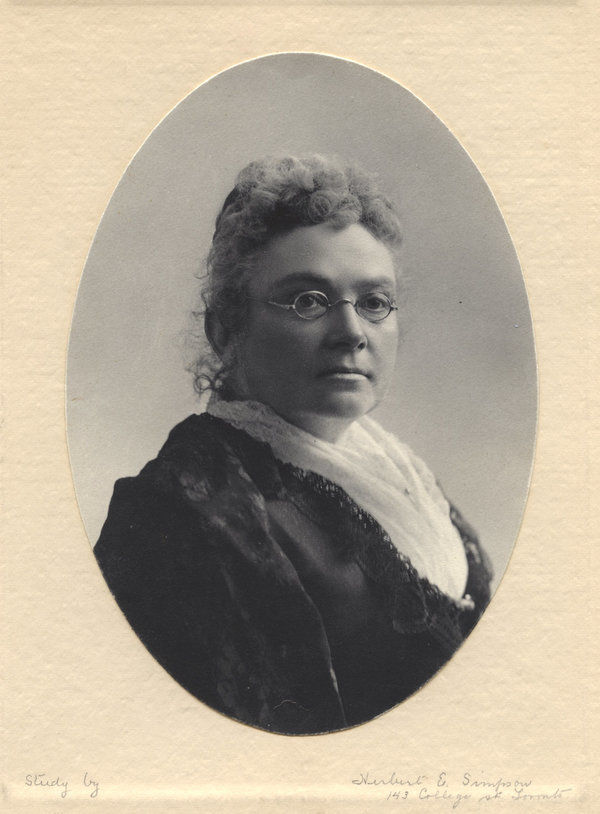
She was the one who pushed boundaries in a world where women were not even allowed to dream about medicine. The name Emily Stowe is rarely mentioned in school textbooks, but without her stubbornness and determination, the history of women in medicine in Canada could have looked completely different, because she was the first woman to practice medicine in Toronto. And this was at a time when it was not allowed by laws, universities, or society. More on torontonka.
Emily was born in the middle of the 19th century. At first, she was a teacher, but she felt that her soul wanted something completely different, something noble and desperate. She did not give up when she was denied a medical education just because of her gender, but went to the USA, studied, returned, and began to treat. Without an official license, but with real knowledge and a deep desire to help others. Eventually, she became the first woman officially registered as a doctor in Canada. And this is not just a biography about another outstanding personality. This is a story about choice and courage. About how one person can change everything around them, and give others the right to follow their calling, not the rules.
Medical Practice, Despite Prohibitions
When Emily Stowe decided to become a doctor, for women in Canada it was something almost incredible. In the 1860s, women were not even admitted to medical schools, and working without a diploma in such a field, of course, was prohibited. But she was not going to betray her own dreams. As already mentioned, Emily was initially a teacher, and, by the way, the first female director of a public school in Canada. But the desire to help people and heal won. Since Canadian universities did not admit women to medical programs, she went to America. In New York, she entered a medical school for women, where she received her education. But when she returned home, she could not get official permission to practice medicine. The Medical Board refused, saying that the training was not right, the country was not right, the diploma was not right.
And yet Emily opened her own practice in Toronto. Without a license and contrary to the laws. She received patients, consulted, treated, and became increasingly famous. The authorities knew this, but they did not dare to pressure her for a long time. Why? Because people trusted her. Especially women, who did not always feel safe and comfortable in the offices of male doctors.
By her example, Emily raised important questions at that time. She showed that women are capable of treating no worse, and sometimes even better than men, because no profession or education has a gender. And that any prohibition is not yet the end.
Activism, Women’s Rights, Education, Elections
Stowe believed that if women did not have access to education, there would be no female doctors or teachers, and therefore no justice. With this conviction, she fought throughout her life. Emily even said: “Then I will devote my whole being to this cause, so that every woman has the same opportunities as men.”
Her path was not easy: in a society where the beautiful half of humanity could not vote and study on an equal footing with men, she stubbornly broke outdated rules. Even before becoming the first Canadian woman to officially practice medicine, Stowe opened a school for girls in Toronto. But this was not a simple school. It was there that girls studied chemistry, philosophy, mathematics, in general, what was previously considered “unfeminine.” She believed that education is the key to freedom, so she was not afraid to change the system from within. Later, Stowe co-founded the “Society for the Improvement of Women’s Status,” which promoted reforms in labor, education, and healthcare. This organization demanded real changes from the authorities, and did achieve results. When the first calls for women’s suffrage began to sound in Canada, Emily was already in the front rows. She did not just support the idea, but did everything possible on her part: spoke in public, wrote articles, organized meetings. Even then, she formed the political consciousness of other women, because she was not satisfied with the role of a “quiet housewife-slave.” Find out more about inspiring women who break barriers, like actress and businesswoman Nina Dobrev.
Mentorship and Changes Thanks to Her Daughter
As you probably already guessed, Emily Stowe became a real salvation and a symbol of change. But it is worth noting that this also happened partly due to her own family, namely, her daughter Ann Stowe. It was precisely because of the need to give her better opportunities for education and life that Emily was able to push society towards a more open attitude towards education and women’s rights.
Her daughter not only followed in her mother’s footsteps, but also became a famous activist in the struggle for justice. Ann organized rallies, collected signatures, and demanded equality, inspired by Emily’s example, who showed that women are capable not only of dreaming, but also of demonstrating high achievements.
For the elder Stowe, such mentorship was not something abstract, but a concrete commitment, because she knew that real changes begin with oneself, with supporting and raising a new generation. That is why her work was not limited to her own medical practice or public speeches – Emily Stowe broke barriers in her profession and became a driver of social transformations to create a powerful wave of change for all women in Canada.