

Ever heard of Christina Petrowska Quilico? If not, it’s a name you’ll want to remember. She’s one of Canada’s most celebrated pianists, with a career spanning decades, hundreds of concerts, and over sixty albums. Her playing is a captivating blend of technical precision and heartfelt emotion, earning her the title “the voice of Canadian music.” Read on to learn more, exclusively on Torontonka.
Early Life and Education
Born in Ottawa in 1948, Christina Petrowska Quilico seemed to be a child who knew exactly what she wanted from a very young age. By ten, she was already gracing the stage with an orchestra, performing a Haydn concerto. At an age when most kids are still running around during school breaks or reluctantly practicing piano, Christina was serious about music, dreaming of dedicating her life to it. She began her professional journey at the Royal Conservatory of Music in Toronto, studying under the renowned educator Boris Berlin. By thirteen, she was accepted into the legendary Juilliard School in New York. The training there was rigorous: strict discipline, countless hours at the keyboard, and fierce competition. Yet, she remained steadfast and focused, as if she knew this path was hers. She was taught by luminaries Rosina Lhévinne and Irwin Freundlich – teachers who only took on the most exceptional students.
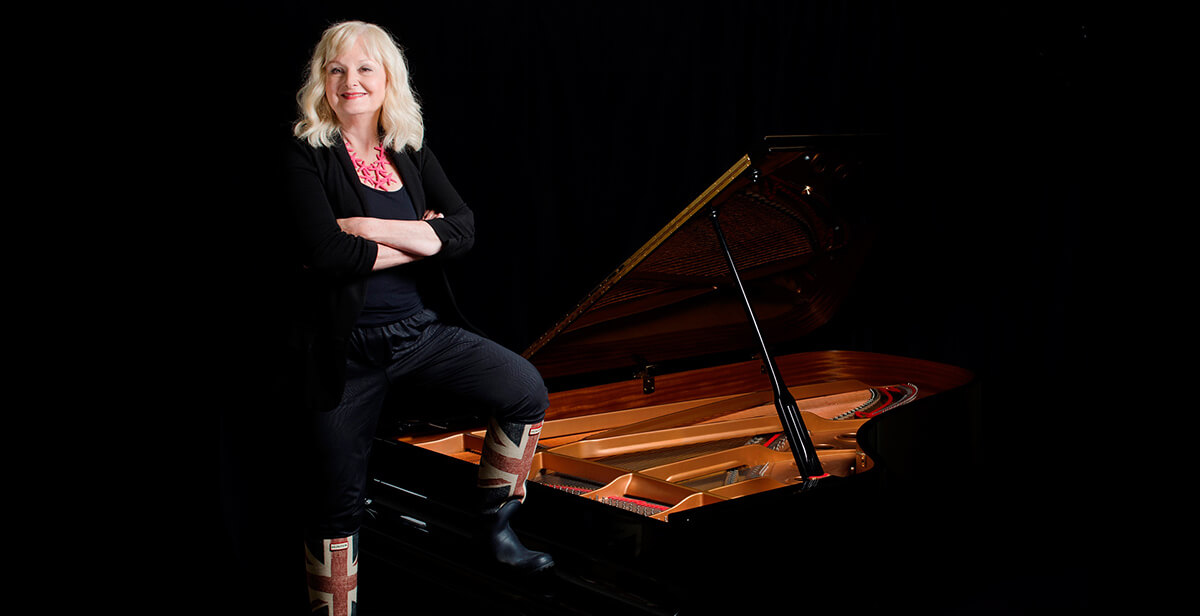
She continued her studies in France and Germany, attending masterclasses with Jean Doyen and even had the unique opportunity to work with avant-garde composers like Stockhausen and Ligeti. While her foundational training was deeply rooted in classical music, she was drawn to complex and experimental sounds from her youth, not because it was trendy, but because she genuinely found it captivating.
Performing Career and Repertoire
Christina Petrowska Quilico isn’t one of those pianists who settles for mastering a single style or a favourite composer. From the very beginning, she seemed to choose a path broader than simply “classical music.” Yes, she plays Bach, Haydn, and Mozart beautifully – all foundational academic repertoire. But that’s only a slice of her talent.
She stepped onto the stage as a child and has never stopped evolving as a professional pianist. She has performed across Canada, the US, Europe, the Middle East, and Asia. Her performances include concerts with the symphony orchestras of Toronto, Vancouver, and Ottawa, as well as solo recitals in prestigious venues, including New York’s Carnegie Hall. But what truly matters isn’t just where she played, but how. Christina has always had a special interest in contemporary music, particularly works by Canadian composers. She didn’t just include them in her programs; Quilico often premiered these pieces, recorded albums, and passionately introduced them to audiences. A significant ongoing project has been her long-term collaboration with composer Ann Southam: Quilico has recorded eight albums of her music. She has also actively championed works by Larisa Kuzmenko, Alexina Louie, and many other Canadian talents.
Listening to Petrowska Quilico, it’s clear she doesn’t categorize music as “old” or “new.” For her, there’s simply good music—music that possesses meaning, character, and depth. Moreover, her repertoire often features works that aren’t typically part of the “standard program” for classical pianists. This is precisely why her concerts are always a little unexpected, and yet, wonderfully so. She never repeats herself. For some, Christina is an “ambassador” of Canadian music; for others, a courageous performer unafraid of complexity. Either way, Petrowska Quilico is a musician whose playing reshapes our very understanding of contemporary piano music.

Recordings, Awards, and Recognition
Looking at Christina Petrowska Quilico’s discography, a simple question arises: when does she find the time for all of this? Over sixty albums, nineteen piano concertos with orchestra, dozens of solo programs, and thematic compilations. But it’s not just about the sheer volume of projects. In every one of Christina’s recordings, you can sense the work not only of a pianist but of a true researcher. She unearths music that almost no one has performed, but which absolutely deserves to be heard. Among her most iconic is the album “Glass Houses Revisited” featuring the music of Ann Southam. It was hailed as a breakthrough, not only for its virtuosity but for the effortless way complex, almost mathematical compositions were transformed into something extraordinarily alive. This album became a bestseller in the Centrediscs catalogue and was included in the list of the 30 best Canadian classical recordings of all time.
Her work has also been nominated for numerous Juno Awards, Canada’s premier music prize. And while she’s received many accolades, it seems Quilico has never chased them. In 2020, she was appointed to the Order of Canada – one of the country’s highest honours. A little later, she also received the Order of Ontario. In 2023, her name was inducted into the CBC In Concert Hall of Fame. This wasn’t just a recognition of her talent; it was a testament to her influence extending far beyond a single genre or musical sphere.
Another special distinction in her biography is the Oscar Morawetz Award, given for exceptional contributions to Canadian classical music. Yet, despite numerous awards and widespread recognition, Christina remains a true musician – one whose primary goal isn’t fame, but to convey the depth and beauty of compositions to her audience.
Teaching, Pedagogy, and Philanthropy
Christina Quilico isn’t just a pianist who receives thunderous applause in concert halls; she’s also a dedicated educator who has shared her expertise with young musicians for decades. In 1987, she joined the faculty at York University in Toronto and remained there for over thirty years. For her, it wasn’t just a formal position. She came to class daily, genuinely listened to her students, offered constructive feedback, and provided support, sometimes going above and beyond what the curriculum required. That’s why her students value her not only for her professional knowledge but for the faith and encouragement Christina invested in each of them.
Quilico never treated her students condescendingly or dictated her rules; instead, she worked, so to speak, as an equal. She knew how to listen to her students, treating them not as pupils but as junior colleagues, while still maintaining high expectations. For her, it was crucial not just to teach technical mastery but to help each individual unlock their full potential.
It’s no surprise that many of her students went on to become successful musicians, composers, and educators themselves. At York University, she was repeatedly recognized, receiving professorial awards, research fellowships, and the title of Honorary Professor. But her support for young talent extended beyond the university walls. After the death of her husband, the renowned Canadian baritone Louis Quilico, she initiated the creation of an award in their names – the Christina and Louis Quilico Award. This scholarship for young opera singers is presented by the Canadian Opera Company in partnership with the Ontario Arts Foundation. The idea is simple: to give talented artists the opportunity to pursue their dreams, whether it’s recording an album, attending masterclasses, or studying abroad – all the things that once helped her own journey.
Beyond this, Christina has frequently participated in charity concerts, supported organizations working with youth and women in the arts, and served as a mentor in independent projects. She cares deeply not only about music itself but also about the ecosystem surrounding it – how accessible, equitable, and open it is to new talent. That’s why she has always been a fierce advocate for cultural initiatives.