

Toronto is a magnificent city, home to millions. It has been the birthplace of many talented and successful individuals who have gained worldwide acclaim. As everyone knows, Toronto has experienced dynamic development over decades. Immigrants from all corners of the globe have flocked here, and continue to do so. Many have found their place in the sun and achieved their aspirations in this metropolis. Today, we delve into the story of Olga Mak, a renowned writer of Ukrainian origin. Last century, she immigrated to Toronto and cultivated a successful writing career. Discover more about Olga Mak’s life and journey on torontonka.com.
Born in Kamianets-Podilskyi
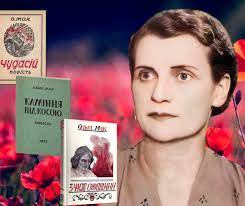
The future writer was born on July 20, 1913, in Kamianets-Podilskyi. Olga spent her early childhood in Kyiv. The family later moved to the village of Vilkhivchyk, before returning to Kamianets-Podilskyi where Olga completed her secondary education. After finishing school, Olga Mak worked on a radhosp (state farm) and dedicated herself to combating illiteracy.
In 1931, Olga married the linguist Vadym Doroshenko. The couple settled in Nizhyn, where Olga enrolled at the Nizhyn Pedagogical Institute.
Tragic chapters followed in Olga’s life. Her husband was repressed and subsequently perished in the camps.
Emigration and Life in Toronto
Unable to remain in Ukraine any longer, Olga made the decision to leave her homeland in 1943. She initially resided in Austria, followed by Brazil, before moving to Toronto in 1970.
As for her literary pursuits, Mak had begun writing during her studies at the institute. However, her first works were only published once she was in emigration. In 1954, she released her debut book, Z chasiv yezhovshchyny (From the Times of Yezhovshchina). In this poignant work, the writer recounts the harrowing years of Stalinist terror she endured.
It was in Toronto that Olga Mak’s literary activities truly flourished. She wrote extensively about the challenges of life abroad: adapting to new conditions, nostalgia for her homeland, and preserving Ukrainian identity. Her most celebrated works include Boh vohniu (God of Fire), Zhaira, Lebidka (The Swan), and Pryzabuti kazky (Forgotten Tales).
It’s worth mentioning that the writer received numerous accolades for her literary contributions, notably from the World Federation of Ukrainian Women’s Organizations.
Mak described her life in Canada as a liberating opportunity for creative self-expression. Indeed, it was in Toronto that Olga could write freely, without the looming fear of persecution. She often highlighted in her works the stark contrast between the freedom of speech she found in Canada and the repressive regime she had experienced in the Soviet Union.
Impact on the Ukrainian Diaspora in Canada and Visit to Ukraine
Canada is known for its well-established Ukrainian diaspora, and Olga Mak became an important figure within this community. She actively championed Ukrainian culture, contributed to Ukrainian publications, and participated in numerous cultural events. Her works became a potent symbol of the struggle to preserve Ukrainian identity abroad.
In the early 1990s, when Ukraine declared its independence, Olga Mak decided to visit her homeland. For the first time since emigrating, she returned to her native city. The writer engaged with readers and young people, sharing the wisdom gleaned from her rich life experiences.
Olga Mak passed away on January 18, 1998, in Toronto. Though Toronto had become her cherished new home, Olga always carried a profound nostalgia for Ukraine. She fondly recalled the beauty of Ukrainian landscapes and its vibrant cultural traditions—themes often woven into the fabric of her literary creations.
So, that’s the illuminating story of Olga Mak. We hope you found it interesting and that it left you with some meaningful reflections.