

Fanny (Bobbie) Rosenfeld was a renowned Canadian track and field athlete and sportswriter. An exceptional multi-sport athlete, she excelled in basketball, athletics, softball, and more. Fanny is best known for her performance at the 1928 Summer Olympics in Amsterdam.
Through her remarkable achievements, Rosenfeld helped popularize and advocate for women’s sports in Canada, becoming a role model for many working-class women. Read more about her life and accomplishments at torontonka.com.
Early Years in Sports
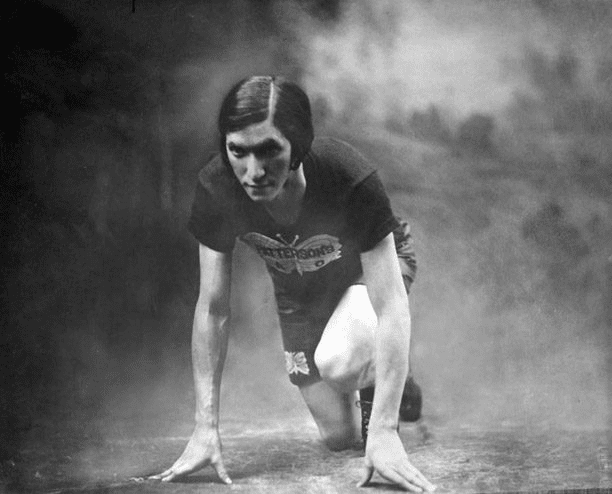
Fanny was born in Dnipro, Ukraine, in 1904, the second child of Max and Sarah Rosenfeld. When she was one year old, her family emigrated from Ukraine to Canada. Her father, Max, initially worked as an iron merchant before establishing a second-hand goods business.
From a young age, Fanny displayed great athletic talent. At nine years old, she won her first 50-metre race. Fanny’s skills extended beyond running, as she enjoyed basketball, softball, hockey, and tennis.
While attending Barrie Collegiate, she became a standout on the school’s basketball team and frequently competed in track and field events. Known for her somewhat unconventional appearance—she often dressed in a more masculine style and wore her hair short, swept to the side—her peers nicknamed her “Bobbie.”
Toronto’s Athletic Star
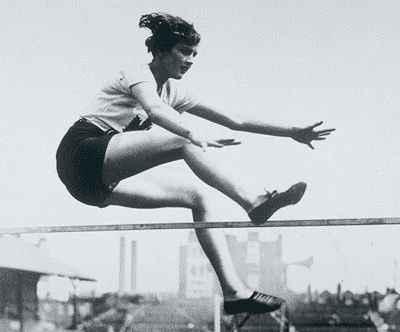
In 1922, at age 18, Fanny’s family moved to Toronto. She enrolled at Harbord Collegiate Institute, which had a strong athletic program, quickly making her mark in Toronto’s sports scene.
Fanny joined the hockey team at the Toronto Young Women’s Christian Association (YWCA) and, by the end of 1922, became part of the basketball team at the Young Women’s Hebrew Association (YWHA). With her on the team, they won city championships and reached the national tournament.
After graduating from Harbord Collegiate in 1923, Fanny began working at Patterson’s chocolate factory, which promoted sports and active leisure for employees. She actively participated in various competitions, dominating women’s hockey in Ontario and playing for one of Toronto’s strongest women’s softball teams, Hind & Dauche. She later joined the Toronto Ladies’ Athletic Club.
Rosenfeld became most famous for her achievements in track and field. In 1923, she began training with coach Walter Knox, and that year, women competed for the first time at the annual Athletic Day at the Canadian National Exhibition (CNE). These events propelled Fanny into the spotlight, and she soon set world records in athletics.
In 1928, women were allowed to compete in the Summer Olympics, and Rosenfeld represented Canada, winning gold in the high jump.
Her sports career ended in 1928 when she was diagnosed with arthritis. She spent eight months bedridden and a year on crutches. In 1931, she returned to softball, and in 1932, she was named Ontario’s top female athlete.
In the spring of 1932, Fanny began her career as a sports journalist for the Montreal Daily Herald. Alongside writing, she continued playing softball.
In 1933, her arthritis flared up again. Although Fanny could no longer play, she remained involved in sports, coaching women’s teams and eventually managing Toronto’s Lakeside Langleys softball team.
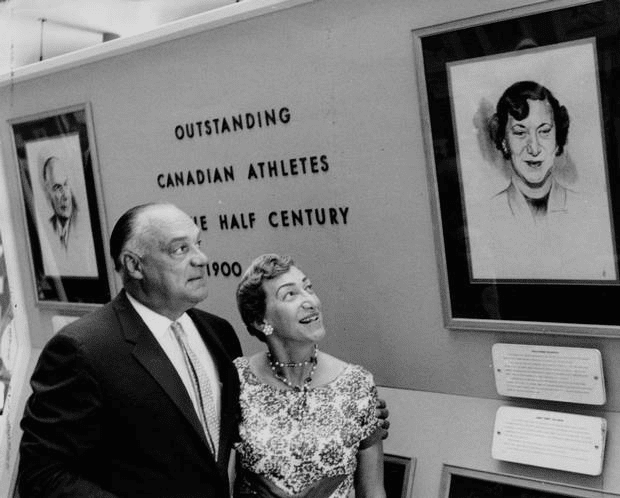
In 1936, Rosenfeld started a sports column in The Globe and Mail. She actively covered local sports, promoted women’s athletics, and advocated for equal opportunities in sports until her column, Sports Reel, ended in 1957.
Fanny Rosenfeld, a true sports legend, passed away in the fall of 1969.