

Café · Toronto · ⭐ 9.3/10 · 841 reviews · updated: 2026-08-10 16:02:55
Address: 50 Wade Ave, Toronto, ON M6H 2Z3, Canada
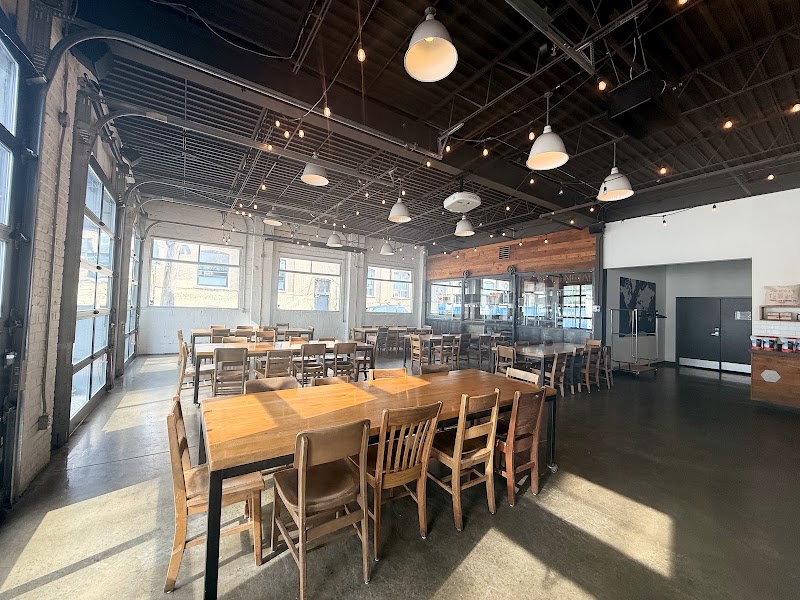
Most cafés buy their coffee from a roastery somewhere else. At Propeller Coffee Co. the roastery is the building you are sitting in. This is a working industrial plant in the Junction Triangle — green beans stored in a climate-controlled warehouse at one end, a Loring roaster running at the other, a cupping room in between — with a large, high-ceilinged café built into the front of it. The result is a room that feels nothing like a neighbourhood coffee shop and behaves nothing like one either: it is cavernous, bright, quiet in the way big spaces are, and people settle into it for hours.
Highlights
- A roastery you can sit inside. The café occupies the front of a working production facility, with the roasting room, the green bean warehouse and the cupping room all under the same roof.
- Canada’s first B Corp certified coffee roaster, running what the company describes as a zero-footprint facility — a certification that audits how the business treats workers, suppliers and the environment, not just what it says about them.
- Named Micro Roaster of the Year by Roast Magazine in 2016, which is the trade’s own award rather than a local listicle.
- A Loring roaster that recirculates its own hot gases instead of venting them, cutting fuel use and emissions — the practical machinery behind the environmental claims.
- Long communal tables and serious daylight, which have made this one of the most reliable rooms in the west end for a person who needs three uninterrupted hours.
- Coffee masterclasses run on site — barista skills, milk steaming, espresso, home brewing — taught in the same building where the beans are roasted.
What’s in the cup
Propeller roasts everything it serves, which puts it in a different category from most of the cafés on this list. The house range is built around named espresso blends rather than a single anonymous one, and they are genuinely different from each other rather than marketing variations: a medium-dark Brazil and Colombia blend that is the flagship and tastes of nougat, chocolate and toffee, with lighter and darker siblings alongside it and two heavier dark roasts for people who want that. Single origins rotate — organic Peruvian and Nicaraguan estate lots have both been in recent rotation — and there is a Swiss Water decaf that is treated as a real product rather than a shrug.
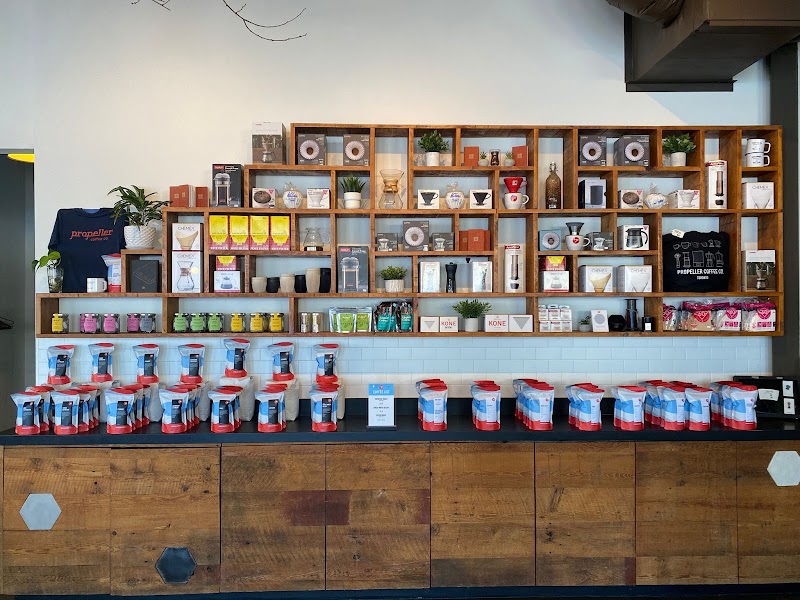
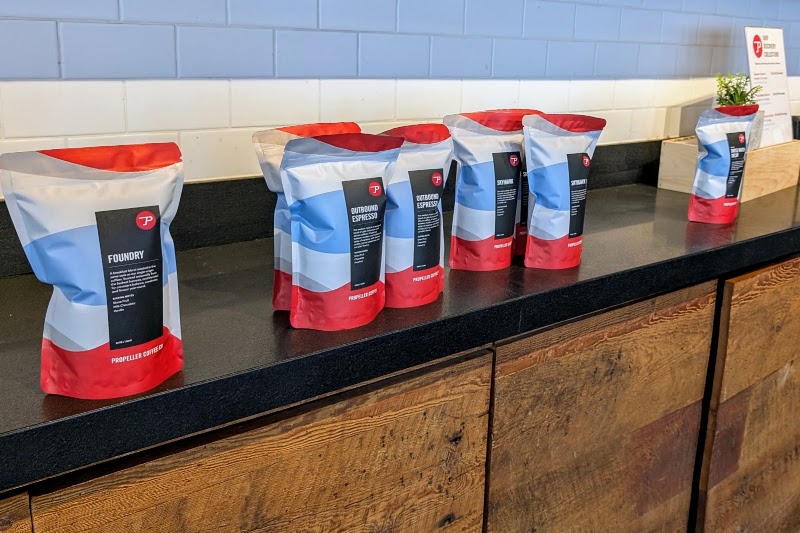
Because the roastery supplies cafés and restaurants across the city, the priority is a coffee that performs in other people’s hands as well as its own: full-bodied, chocolate-forward, forgiving of a slightly rough extraction. That house character is why the flagship espresso has a following among people who brew at home — it is one of the blends Toronto home baristas name unprompted, and the retail shelf at the counter exists largely to serve them. Cold brew comes in cans, and there is an instant line for travel.
The non-coffee side is covered rather than neglected: organic matcha and hojicha are both on, so the person who does not drink coffee is not left with a teabag. And because the roasting happens metres away, the counter can actually answer questions about what is in the hopper this week — one of the few places where asking is not a performance.
Who’s behind it
Propeller was started in 2013 by Geoff Polci and Losel Tethong, who already had a Toronto coffee business behind them and wanted a roastery of their own rather than a bigger café. The founding story is a good one: one of them spent months cycling and walking the west end looking at close to thirty possible buildings before landing on a derelict industrial shell with a wrecked floor, leased from the family behind a long-established Portuguese grocery business. They rebuilt it over a summer and pulled the first roast in October 2013.
What followed established the company’s position quickly — the international micro-roaster award in 2016, B Corp certification as the first Canadian coffee roaster to hold it, and a wholesale book that reaches cafés and restaurants across the city. The cupping room was deliberately opened up to the wider barista community from early on, which is why the place has a reputation among people in the trade as well as among customers.
What it’s for
This is, first and above all, a room for getting work done — and it is one of the best in the city for it. The tables are long and wide enough that a laptop, a notebook and a coffee do not crowd each other; the ceilings are high, so the acoustics swallow noise instead of amplifying it; the daylight is abundant; and nobody comes to move you along. People genuinely bring an external monitor and a keyboard here. If you have three or four hours of concentration to spend, the shortlist of west-end rooms that can absorb it is short, and this is at the top of it.
The second use is the long, unhurried sit that is not work at all. Because the space is big and the tables are communal, it absorbs groups without them dominating the room — friends over a board game, a book, a pair of people talking for two hours. Weekend afternoons here have a slow, occupied quality that small cafés cannot produce, simply because in a small café you would feel obliged to leave.
The third is the learning visit: the masterclass programme runs in the building, and for anyone who brews at home it is the most direct way to fix whatever is going wrong on your own machine. The fourth is retail — a bag of beans, filters, brewing gear — which for the roastery is a serious part of the business rather than a shelf by the till.
One honest constraint: the café is also an event venue, hosting weddings and corporate functions, and the published café hours carry a caveat about changing for events. Check before making the trip if you are coming across town, because a private booking can close the room to the public.
The space
The building is a converted industrial hall and makes no effort to hide it: exposed structure, concrete, tall ceilings, large windows, and a scale that has more in common with a workshop than with a café. The front section holds the seating and the counter, with the production side behind, so you are drinking coffee inside the plant that made it. On a bright day the light is the room’s best feature.
Seating is dominated by long shared tables, with smaller options around them. Capacity is high by café standards, which is why the seat anxiety that defines most specialty rooms simply does not apply here — even at busy times there is usually somewhere to sit. The trade-off is intimacy: this is not a cosy room, and a quiet conversation for two feels slightly exposed in a hall this size.
Noise sits low. A big hard-surfaced space could easily be a echo chamber, but in practice most of the room is people working with headphones on, and the loudest thing is the espresso grinder. As an event venue it also gets used for weddings and corporate functions, which tells you something about how the space looks when it is dressed — it is a genuinely handsome industrial room, not just a practical one.
Beyond coffee
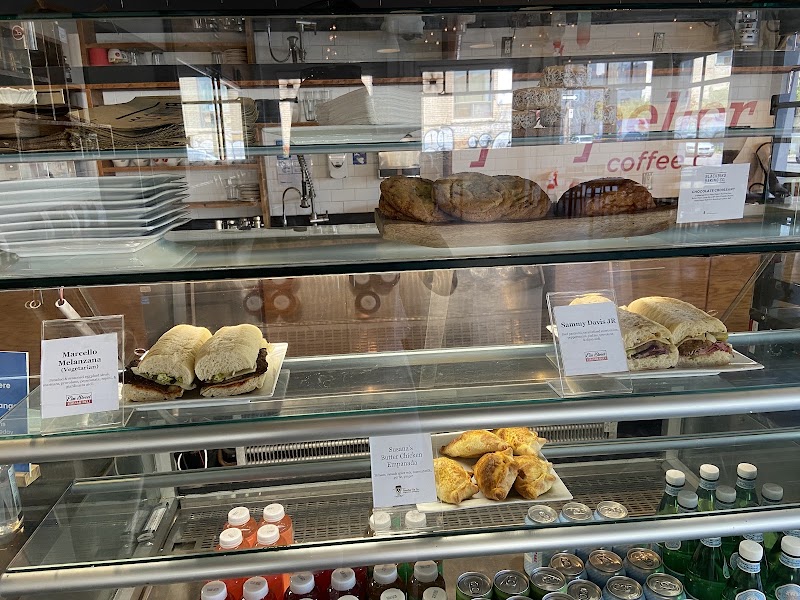
Food is a supporting act, and it is bought in rather than baked here — the ovens in this building are for coffee. The counter carries a curated pastry selection and a small amount of café fare, including a croissant-based breakfast sandwich that is the item most often named by regulars, plus brownies and similar things to go with a long sitting.
It works well as a breakfast or a snack alongside several hours of work, and it does not pretend to be lunch service. Anyone planning a proper meal should eat first; anyone planning to camp here for the afternoon will find there is enough on the counter to keep going. The retail side of the same counter is much deeper: freshly roasted beans from the full blend and single-origin range, brewing gear, filters, cold brew cans and instant coffee.
When to come
The rhythm here is the opposite of a downtown café’s. The doors open in the morning and the room closes in the afternoon, well before dinner, and it winds down even earlier at weekends — this is a daytime destination and there is no evening trade at all. Anyone planning a long working session should arrive in the morning rather than after lunch, or risk being asked to pack up sooner than expected.
Weekday mornings are the productive stretch and also the easiest time to get the counter’s attention. Weekend afternoons are more social and more crowded, with families, groups and people who have walked over from the surrounding neighbourhoods. Because the space doubles as an event venue, the useful habit is to check that the café is open to the public on the day you plan to go — a wedding or a corporate booking overrides the usual schedule.
Getting there
The roastery sits in the Junction Triangle, in the pocket of former industrial land wedged between rail corridors in the west end. Lansdowne Station on the Bloor–Danforth line is the closest subway stop and a short walk away; the Bloor rail station, served by the regional network and the airport express, is also within walking distance, which makes this an unusually easy café to reach directly from the airport.
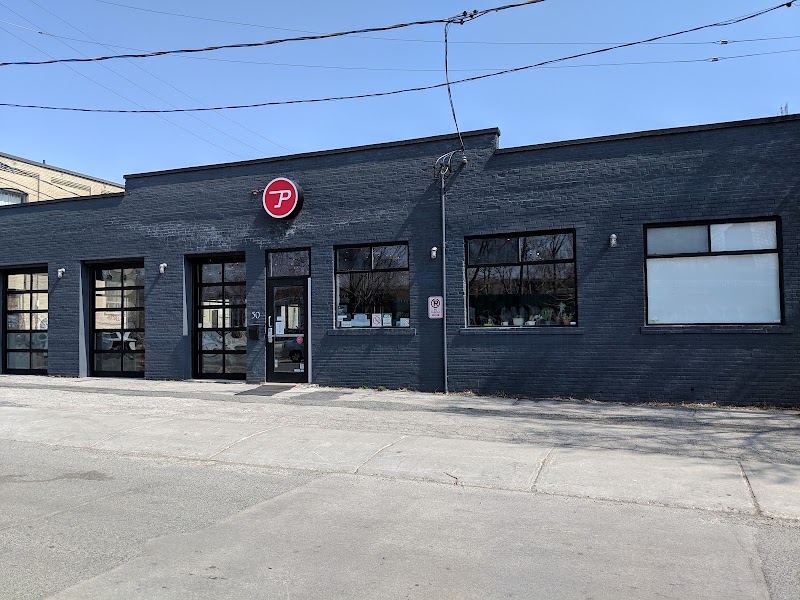
The immediate surroundings are light industrial rather than picturesque — this is not a strip of shops, and the building announces itself rather than blending into a retail row. That works in the café’s favour: there is no passing tourist trade, and everyone in the room chose to come. Cycling is easy and the area is far less parking-hostile than downtown.
Good to know
Know which Propeller you are going to. The company runs its café here at the roastery plus counters inside two bookshop locations elsewhere in the city; they pour the same coffee, but a counter inside a retail store is a completely different visit from a warehouse with communal tables. Everything described here is the roastery site.
Check the schedule before travelling, because event bookings can change when the room is open to the public. Come in the morning if you need a long session, since the café closes in the afternoon. Bring headphones — the room is quiet but it is not silent, and it is at its best when you treat it as a shared workspace. And ask what is being roasted: this is one of the few cafés in the city where that question has an immediate, specific answer.
Questions and answers
Does Propeller roast its own coffee?
Yes — everything served is roasted in the same building, on a Loring roaster that recirculates its own hot gases. Green beans are stored in a climate-controlled warehouse next to the roasting room, and there is a cupping room on site.
Is it a good place to work on a laptop?
It is one of the best in the west end. Long shared tables, high ceilings that absorb noise, abundant daylight, no time limits and enough capacity that you will usually find a seat. People bring full setups here.
What makes the roastery notable beyond the coffee?
It was named Micro Roaster of the Year by the trade’s own magazine in 2016 and is Canada’s first B Corp certified coffee roaster, operating what the company calls a zero-footprint facility.
Which coffee should I try first?
The flagship medium-dark espresso blend, built from Brazilian and Colombian coffee and tasting of nougat, chocolate and toffee, is the house signature and the one home brewers buy by the bag. If you want something brighter or darker, the range covers both.
Is there food?
Pastries and light café fare, brought in rather than baked here — a croissant breakfast sandwich is the item most often ordered. It suits a breakfast or a snack, not a full lunch.
Can I take a coffee course here?
Yes. Masterclasses in barista skills, milk steaming, espresso and home brewing run on site, taught in the same building where the coffee is roasted.
Is it open in the evening?
No. It opens in the morning and closes in the afternoon, earlier still at weekends. There is no evening trade, and private events can change the public opening on a given day — worth checking before you travel.
How do I get there by transit?
Lansdowne Station on the Bloor–Danforth line is a short walk away, and the nearby Bloor rail station links to the regional network and the airport express, making this one of the easier specialty cafés to reach straight from the airport.
Opening hours
| Day | Hours |
|---|---|
| Monday | 08:00–16:00 |
| Tuesday | 08:00–16:00 |
| Wednesday | 08:00–16:00 |
| Thursday | 08:00–16:00 |
| Friday | 08:00–16:00 |
| Saturday | 09:00–15:00 |
| Sunday | 09:00–15:00 |
Photos
Visitor reviews
Reviews last updated: 2026-08-10 16:02:55
Data is refreshed monthly. Sources: torontonka.com and editorial picks based on reviews.
We were in the area after lunch at Sugo and were looking for a great coffee. Thanks to ChatGPT, we came across this recommendation. Check it out with reviews; I love the fact that it’s located inside a warehouse.
We wen…
Обожнюю весілля в Propeller Coffee! Я весільний флорист, і кожна моя робота над оформленням виходить бездоганною та розкішною! Персонал такий привітний, організований та люб'язний. Простір такий затишний, стильний та уні…
Обожнюю це місце! ☕️ Дуже розслаблююча атмосфера, а кава справді дуже смачна. Ідеальне місце, щоб відпочити, попрацювати або просто трохи розслабитися.
Персонал привітний і зовсім не лякає, що я ціную. Тепер це точно о…
Турбо Еспресо – мій абсолютний єдиноріг – найкращий домашній еспресо, який я коли-небудь готував!
Я роками варю каву вдома, пробуючи все: від італійського імпорту до кави від інших місцевих обсмажувачів, і ніщо не вража…
Ми снідали круасаном BLT та лате — обидва були смачними. Кава мала досить яскраву кислинку, що мені особисто дуже подобається. Зал великий, світлий та стильний, з великою кількістю місць для сидіння. Тут дуже гостинна ат…