

Today, walking down Queen Street West or Ossington, you are more likely to meet someone with a tattoo than without one. Subtle botanical illustrations, Japanese sleeves, minimalist geometric patterns—ink under the skin has become as much a staple of Toronto’s cityscape as a cup of coffee from Tim Hortons.
But rewind eighty years to “Toronto the Good”—and that same illustrated sleeve would have seen you barred from a decent hotel, fired from your bank job, and put on the police’s radar as a potential criminal. The history of Toronto’s tattoo culture is a gripping thriller about how the ultimate mark of outcasts transformed into today’s most expensive canvas, writes torontonka.
Sacred Charcoal: The Pre-Colonial Era
The history of tattooing on the shores of Lake Ontario began long before the word “Toronto” even existed. The region’s Indigenous peoples, including the Huron-Wendat and the nations of the Haudenosaunee Confederacy (Iroquois), had been practicing tattooing for centuries.
For Indigenous peoples, tattooing was far more than mere body ornament; it was a sacred ritual. Designs were applied using bone needles or plant thorns, with soot mixed with water or animal fat serving as pigment. Tattoos marked clan affiliation, recorded battlefield exploits, acted as protective amulets against evil spirits, or served as a lifelong chronicle. With the arrival of Europeans and forced assimilation, these traditions were brutally suppressed. Yet, they remain the first historical layer of tattoo culture in Ontario.
Portside Marginalism and “Exotic” Tattoos in Toronto (Late 19th – First Half of the 20th Century)
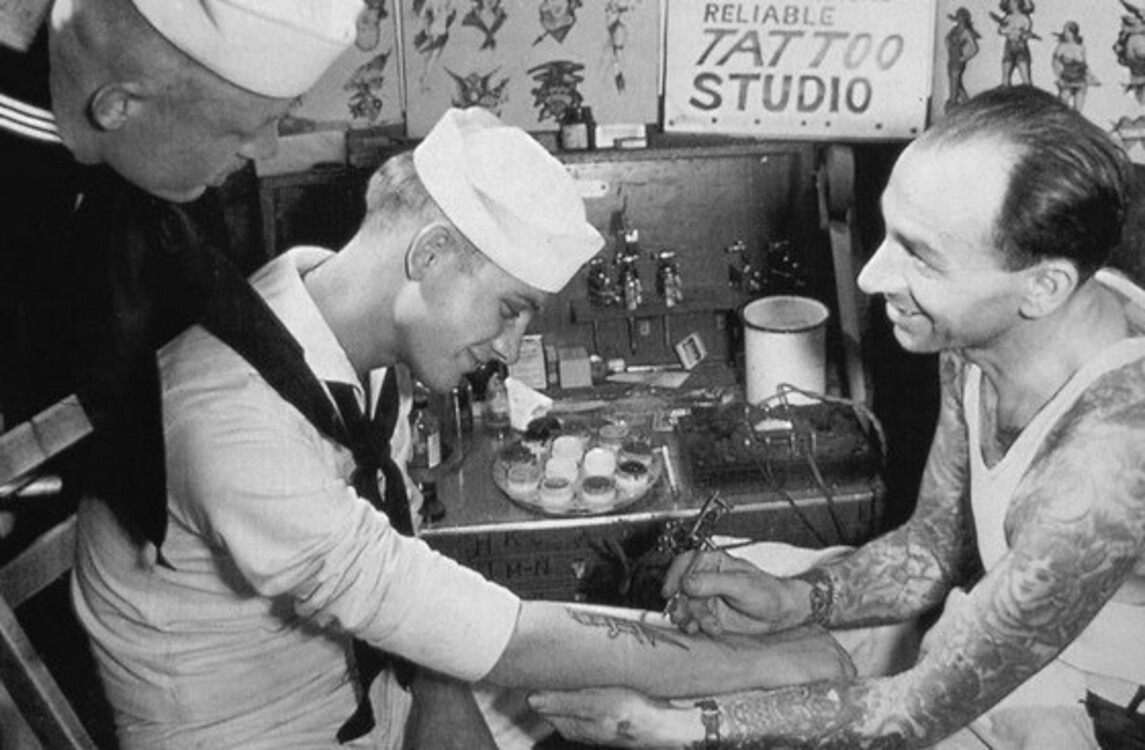
As Toronto developed into a major port city on the shores of Lake Ontario in the late 19th century, the nature of tattooing shifted dramatically. The port became a gateway for new cultural influences. It was here, in the Harbourfront district and surrounding working-class neighborhoods, that the first traveling tattoo artists began to appear.
The clientele of these early “commercial” tattooists consisted of sailors, soldiers, dockworkers, and laborers. The designs were simple and practical: anchors, swallows (symbolizing a safe return home), names of loved ones, and patriotic symbols.
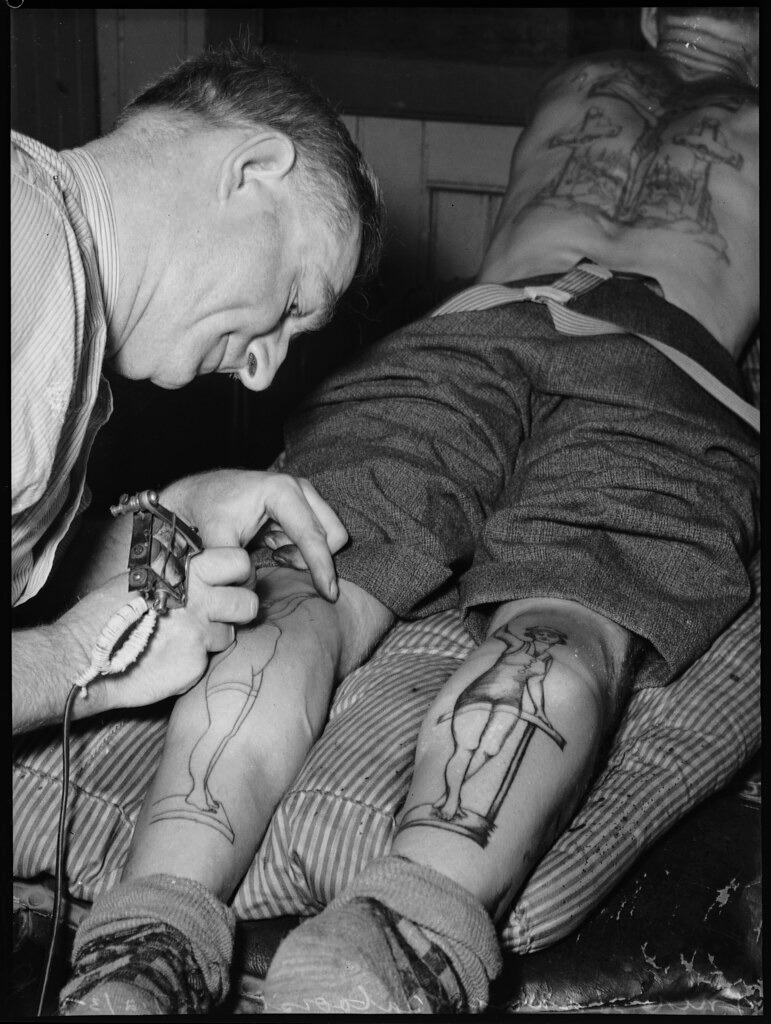
During this period, Toronto’s public consciousness relegated tattooing entirely to the fringes of society. The city’s mainstream press and religious communities branded tattoos as “signs of degeneracy, criminal tendencies, and moral decay.” Society viewed the tattooed body as something “alien,” “savage,” or “dangerous.”
Patriotic Pigment (1914–1945)
A true tectonic shift occurred during the First and Second World Wars. The grounds of the modern-day CNE and Union Station became massive transit hubs for hundreds of thousands of Canadian soldiers heading to Europe.
Facing the prospect of death, young men from Saskatchewan farms and the quiet streets of Etobicoke got tattooed in droves. This was no longer seen as a sin—it was patriotism. They rushed to get maple leaves, Royal Canadian Navy emblems, helmeted bulldogs, and the words “Death Before Dishonor” inked onto their skin.
The Strip of Freedom: Yonge Street’s Golden Era (1960s–1970s)
The real explosion of tattoo culture in Toronto happened in the 1960s and 1970s, and was inextricably linked to the legendary Yonge Street (specifically, the stretch between College and Queen streets). Back then, this part of the city was the epicenter of counterculture, rock ‘n’ roll, neon signs, strip clubs, and underground hangouts.
It was here that the first permanent professional tattoo parlors began to open. This was the era of punks, bikers, and hippies. Tattoos became a visual manifesto of protest against conservative Canadian society. Because opening a tattoo shop officially in conservative Toronto was a bureaucratic nightmare, many artists worked semi-underground, disguising their studios as barbershops or souvenir stores.
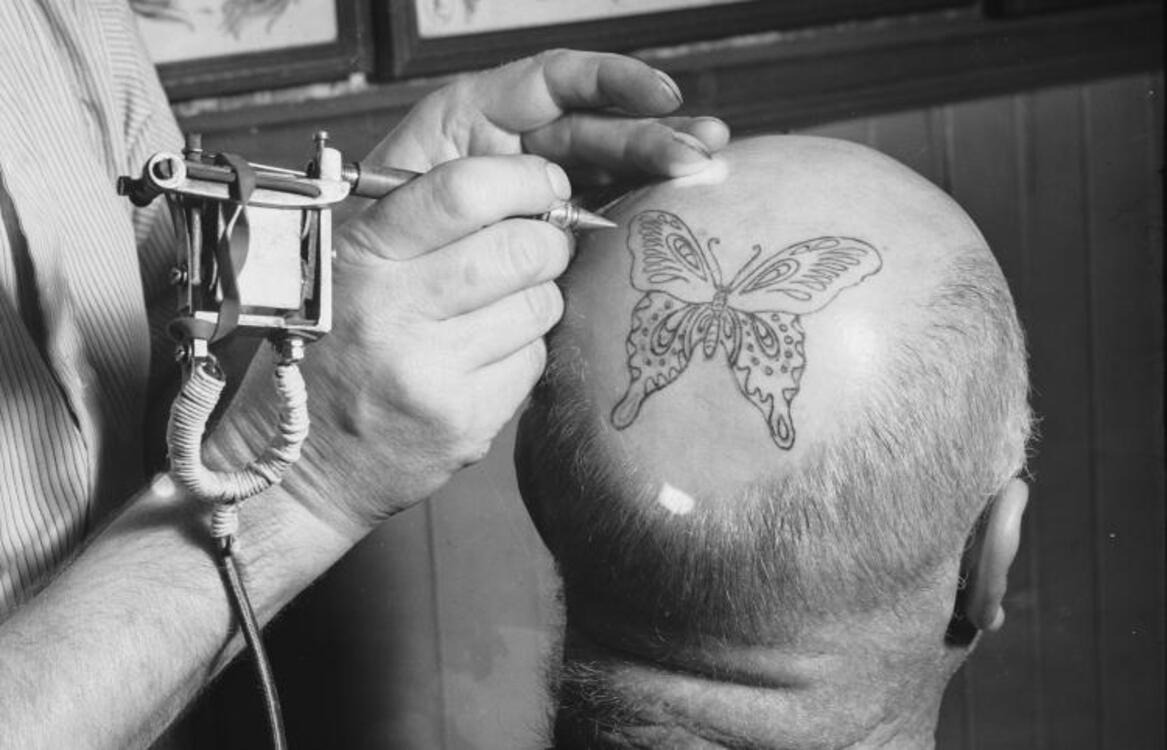
During this period, what sociologists call the “tattoo renaissance” began to take shape. The first well-known artists emerged, viewing their work not as a trade for outcasts, but as an art form. Legendary studios like Waycool Tattoos laid the groundwork for professional standards and Toronto’s unique artistic styles.
The Theory of “Bricolage” and the Sociocultural Turning Point
To understand how tattooing in Toronto made the transition from the underground to art galleries, one must look to sociology, specifically the concept of “bricolage” developed by subculture researchers (such as Dick Hebdige).
Toronto’s subcultures (bikers, punks, inmates) crafted their style by adopting and altering symbols of the dominant class. They took religious imagery (crosses, angels), patriotic emblems, or mainstream symbols and transformed them into signs of rebellion by inking them onto their skin. It was a direct protest against the system.
However, in the late 1980s and 1990s, a reverse process occurred. Mainstream culture executed what is known as the “sanitization” of subcultural bricolage. Toronto’s middle class began actively embracing tattoos, but stripped them of their dangerous, criminal, or marginal connotations. Tattoos were no longer associated with prisons or biker gangs. They became a commodity, an element of personal style, and a symbol of individual freedom. Instead of “marks of the marginalized,” society began talking about “skin art” and “tattoo artists.”
Sanitary Breakthrough and Legitimation (1980s–1990s)
A crucial role in legitimizing tattoos in Toronto was played not just by changing fashion, but by the introduction of strict medical standards. In the 1980s, amid fears over the spread of hepatitis and HIV, Toronto Public Health became one of the first in North America to implement rigorous regulations for tattoo shops.
This move, initially viewed by artists as government pressure, actually saved the industry. The introduction of single-use needles, autoclaves for sterilization, and mandatory inspections lifted tattooing out of the “dirty underground” and into a safe, regulated space.
Middle-class clients—lawyers, doctors, and students from the University of Toronto—no longer feared infection and began flocking to parlors.
By the late 1990s, Toronto cemented its status as a global hub for tattoo art by launching Northern Ink Xposure (NIX), one of the oldest and largest tattoo conventions in Canada. This annual event gathers hundreds of the world’s best artists and thousands of visitors, showcasing a high level of artistic mastery.
The Modern Toronto Scene: A Multicultural Kaleidoscope
Today, Toronto’s tattoo scene reflects the multicultural soul of the city itself. There is no single dominant style. Instead, several styles harmoniously coexist:
- classic American traditionalism (old school);
- Japanese irezumi, represented by artists who spent years studying the tradition in Asia;
- modern styles: watercolor, graphic minimalism, delicate dotwork, and micro-realism.
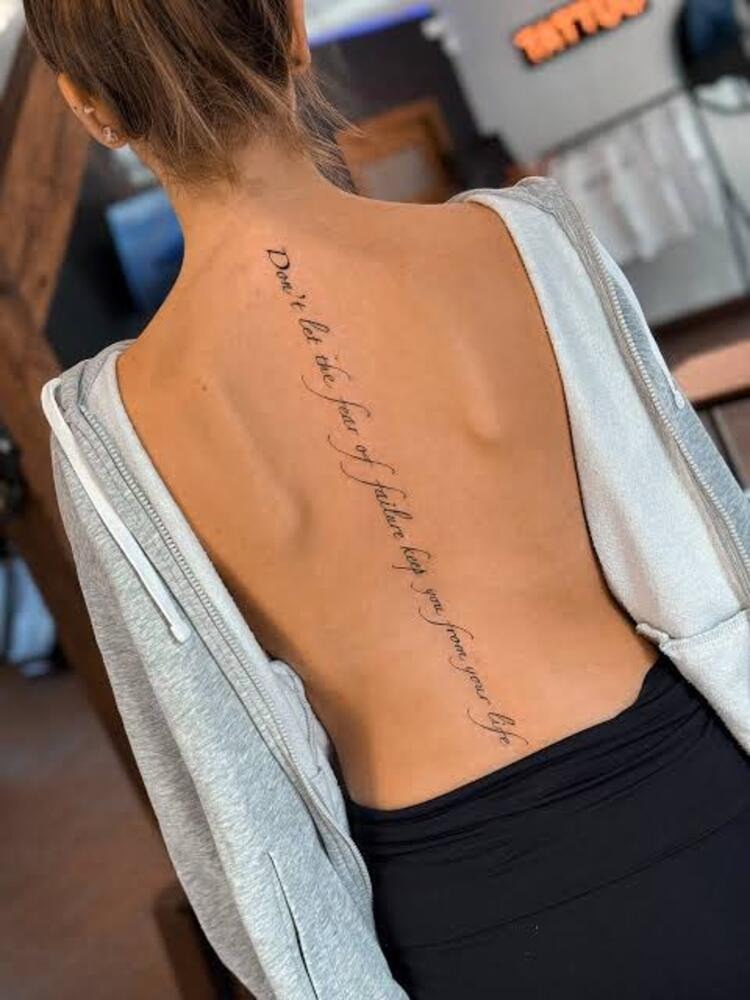
Technological advancements, the rise of vegan inks, safer aftercare products, and, of course, social media (particularly Instagram) have rewritten the rules. Instagram has turned the bodies of Torontonians into mobile galleries, and the artists themselves into influencers with hundreds of thousands of followers.
Conclusion
The history of tattooing in Toronto is a fascinating chronicle of social change. Traveling a long path from the sacred symbols of Indigenous peoples, through marginalized portside taverns, to the loud counterculture of Yonge Street, tattooing has finally earned its place as a legitimate art form. Today, the ink under the skin of Toronto’s residents is not a sign of rebellion or danger, but a unique language of self-expression with which the megacity writes its modern history.